
Camión volquete lateral
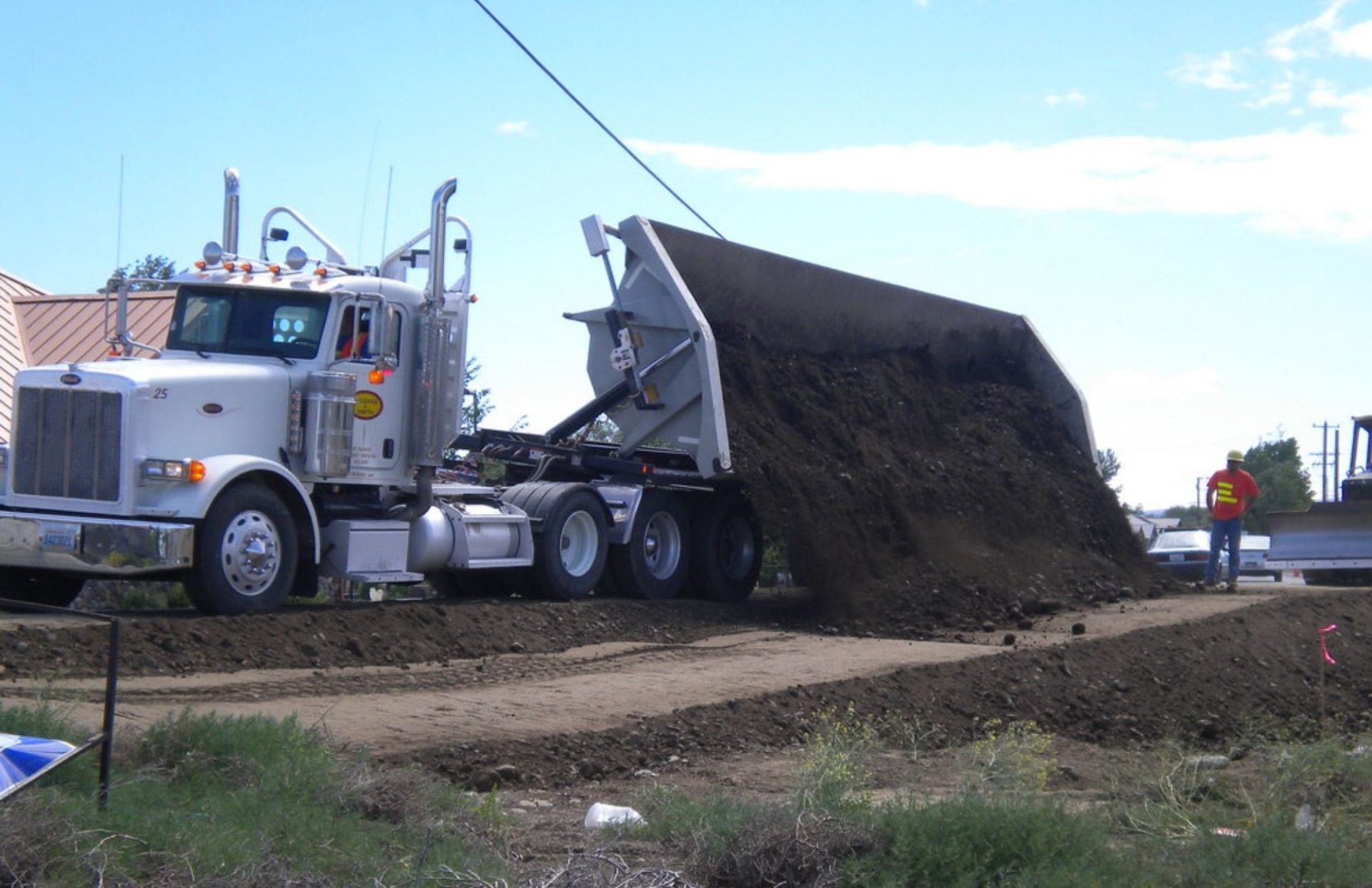
Camión volcador lateral
A side dump truck (SDT) consists of a 3-axle tractor pulling a 2-axle semi-trailer. It has hydraulic rams that tilt the dump body onto its side, spilling the material to either the left or right side of the trailer. The key advantages of the side dump are that it allows rapid unloading and can carry more weight in the western United States. In addition, it is almost immune to upset (tipping over) while dumping, unlike the semi end dumps which are very prone to tipping over. It is, however, highly likely that a side dump trailer will tip over if dumping is stopped prematurely. Also, when dumping loose materials or cobble sized stone, the side dump can become stuck if the pile becomes wide enough to cover too much of the trailer's wheels. Trailers that dump at the appropriate angle (50° for example) avoid the problem of the dumped load fouling the path of the trailer wheels by dumping their loads further to the side of the truck, in some cases leaving sufficient clearance to walk between the dumped load and the trailer.
Un Roll-off tiene un polipasto y un bastidor auxiliar, pero nadie lleva contenedores desmontables. El contenedor se carga en el suelo y luego se tira hacia la parte trasera del camión con un cabrestante y un cable. El camión va al vertedero, después de que se ha descargado, se toma el contenedor vacío y se coloca para ser cargado o almacenado. El polipasto se eleva y el contenedor se desliza por el bastidor auxiliar de modo que la parte trasera esté en el suelo. El contenedor tiene rodillos en la parte trasera y se puede mover hacia adelante o hacia atrás hasta que la parte delantera se baje al suelo. Los contenedores suelen ser cajas abiertas en la parte superior que se utilizan para escombros y desechos de construcción, pero también se llevan contenedores compactadores de basura.


